


The problem
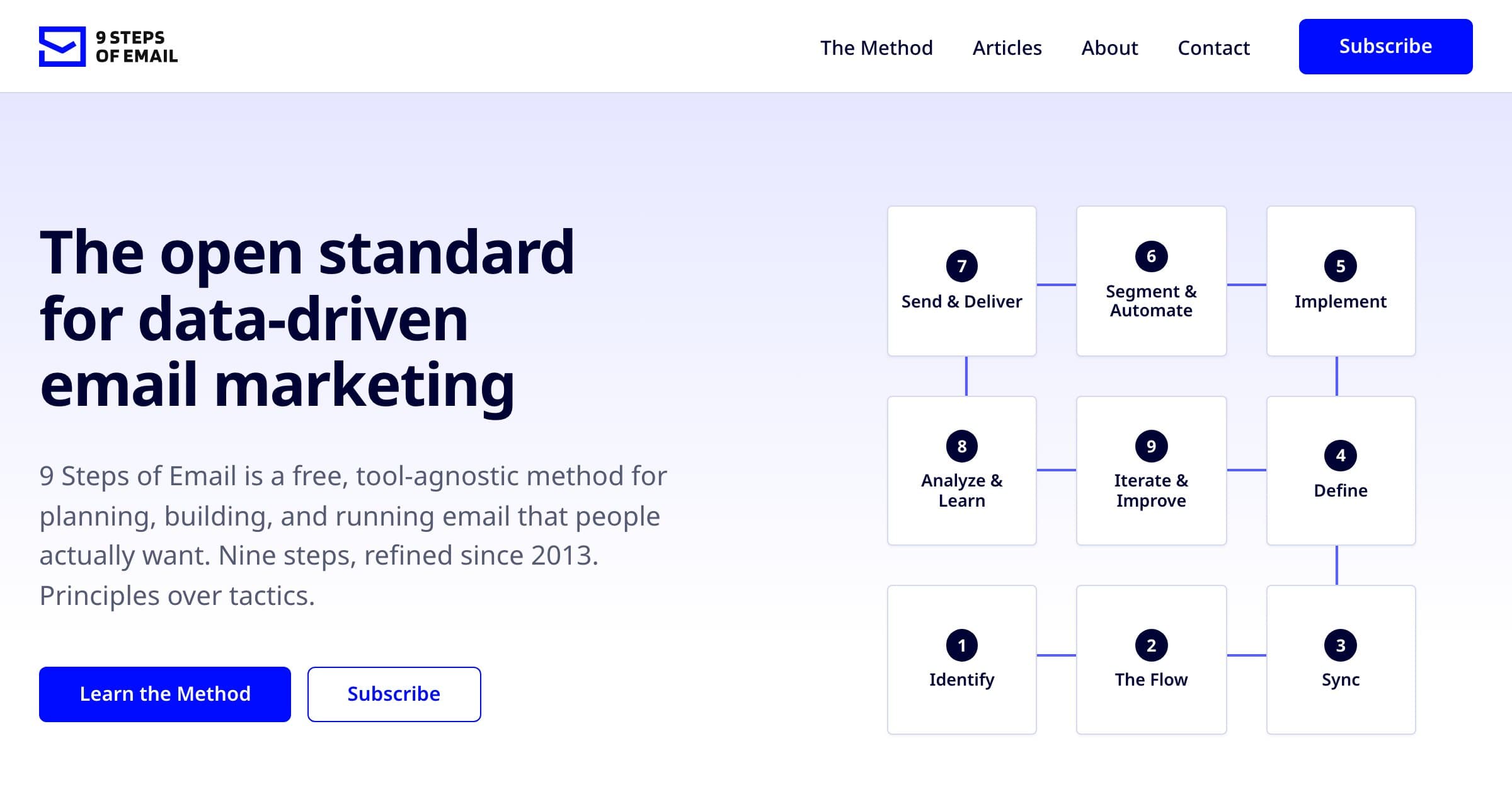
9 Steps of Email is a method I wrote in 2013 for planning, building and running email marketing, and it is the one I still work by. Until June 2026 it sat on a WordPress site, laid out as a course. A course is something a reader goes through once. A method is something people look up, cite and teach from, and for that it needs one address for the whole thing and a stable address per step, readable by a person, a search engine and an AI assistant alike. The site had one job beyond publishing: let a reader subscribe and send them the checklist they were promised. It sells nothing. A reader who wants the method applied for them is pointed to Elenion.
What I did
I moved it from WordPress to Next.js and rebuilt it as a reference. One long page holds the whole method, all nine steps, each with its own anchor, and the first four steps also have a full article each. Thirteen pages in all, in English, written as plain text files with no CMS. The 21 old WordPress addresses redirect to the step or article that replaced them, the old blog address to the articles and four off-topic ones to the homepage: 26 rules. The six diagrams in the articles are drawn from text and shipped as static images. Every page carries structured data, and the site publishes a sitemap, an RSS feed and a plain-text summary for AI crawlers.
Subscribing is one field. The address is validated, screened by a honeypot and a bot check, then written to the site's own store, one row per address, tagged with the place on the site where the reader signed up. Postmark sends the checklist. The contact form sends me the message and the sender a confirmation in one call; if my copy is rejected, the visitor sees an error and not a thank-you.
Analytics load only after a visitor accepts them. An accessibility check runs over every page at desktop and phone widths and fails on anything it cannot decide, not only on what it can prove wrong. Since August 2026 the method page also links a free skill for Claude that audits an email program against its own stated intent.
The hard part
A CRM sized to the job. The first version handed each subscriber to a rented CRM tool. For a project that plans no emailing beyond delivering the checklist, the tool turned out to be more to set up and look after than the job it had to do. So I built a small CRM into the site: an append-only file on a persistent disk, one row per address, and Postmark for delivery. Two decisions made it sound. Storing and sending are separate and neither can fail the reader, so someone who typed a good address never sees an error for a fault that is mine. And list mail goes out on Postmark's broadcast stream, apart from the contact form's mail, so every checklist email carries a one-click unsubscribe. Each row keeps where the reader signed up, which means the list can move into a larger CRM later without guessing where anyone came from.
What changed
The method is public and whole: one address for the method, one for each of the first four steps, and the old addresses lead there. On October 3, 2026 the accessibility check passed on every page at desktop and phone widths with nothing left open; the first run of the stricter check that day had left 250 and 199 lines of text undecided. A check of each page's search markup passed 144 of 144 items, up from 75. Subscribers live in the site's own small CRM and get the checklist with no third tool in between. Subscriber numbers and search traffic are my own figures and are not published here, and no speed test of the live site is on record.